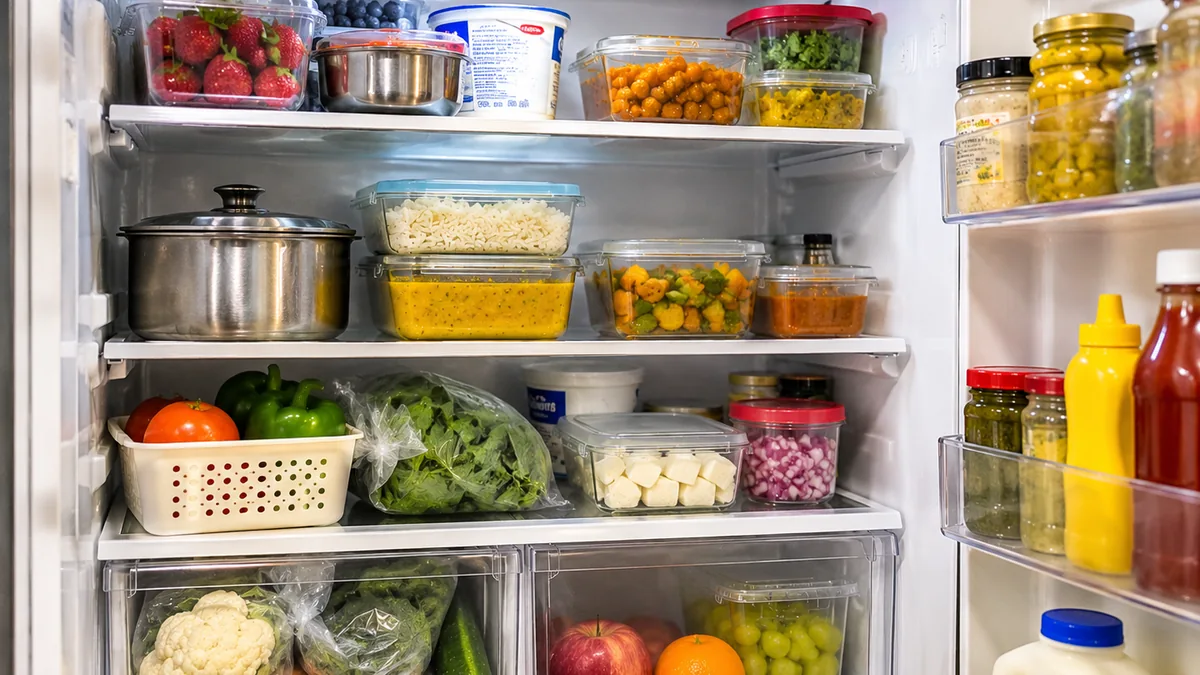
Wondering how to organize your fridge to reduce food waste and make everyday cooking easier? A few simple changes can help you keep track of leftovers, use vegetables before they spoil, and avoid buying ingredients you already have.
It happens easily, especially when you’re cooking every day. You put away groceries, save leftovers, and make space wherever you can. Before you know it, older ingredients get pushed to the back and forgotten.
Sometimes, we even buy more vegetables because we don’t remember what’s already in the fridge.
The good news is that you don’t need expensive organizers or a perfectly arranged refrigerator to reduce food waste.
A few simple habits can help you see what you have, use ingredients before they spoil, and make everyday cooking easier.
Here are ten practical ways to organize your fridge without adding more work to your day.
Table of Contents
1. Keep Older Food Where You Can See It
One of the easiest ways to reduce food waste is to make sure older food doesn’t disappear behind new groceries.
When you return from grocery shopping, take a minute to move older items toward the front before putting new ones away.
For example, if you already have two tomatoes and just bought four more, keep the older ones where you’ll notice them first.
Do the same with yogurt, vegetables, and leftovers.
You don’t need to rearrange the entire refrigerator. Just make sure the ingredients that need attention aren’t hidden.
JivaKitchen Tip: Before putting new groceries away, check for opened packages and partially used vegetables. Plan to use them first, as long as they’re still safe to eat.
2. Create a Small “Eat First” Section
Choose one easy-to-see area of your refrigerator for foods that should be used soon.
You might keep:
- Half a bell pepper
- A small container of leftover dal
- Opened yogurt
- Cut vegetables
- Leftover sabji
- Fruit that needs to be eaten soon
You don’t need a special bin. A small section of an existing shelf works just as well.
When you’re wondering what to cook, check this area before reaching for new ingredients.
For example, half a bell pepper could go into a quick paneer sabji, while a small portion of dal might be enough for lunch with freshly prepared rice.
Remember: An “eat first” section is a reminder, not a way to extend food’s shelf life. Always follow safe storage times.
3. Give Different Foods Their Own Space
Keeping similar foods together makes it easier to find ingredients and helps prevent food from getting lost behind other items. It also helps you store food safely. You don’t need a complicated system. A few basic guidelines are enough.

Top and Middle Shelves: Leftovers, Dairy, and Ready-to-Eat Foods
These shelves are useful for foods such as:
- Cooked dal and sabji
- Leftover rice
- Yogurt and cheese
- Homemade paneer
- Other ready-to-eat foods
Keep leftovers in covered containers and place older ones where you can easily see them.
If you prepare homemade paneer, store it promptly in a clean, covered container and follow appropriate refrigeration guidance for fresh homemade cheese.
Bottom Shelf: Raw Meat and Seafood
If your household stores raw meat, poultry, or seafood, keep these foods in sealed, leakproof containers on the bottom shelf.
This helps prevent juices from dripping onto other foods.
If you don’t store these items, use the shelf for other refrigerated foods according to your refrigerator’s storage recommendations.
Crisper Drawers: Fruits and Vegetables
Use the crisper drawers to keep fresh produce organized.
Many refrigerators have adjustable humidity settings that help certain fruits and vegetables stay fresh longer.
As a general guide:
- Keep leafy greens and vegetables that wilt easily in a high-humidity drawer.
- Store many fruits in a low-humidity drawer.
- Separate ethylene-producing fruits from sensitive vegetables when practical.
- Follow individual storage recommendations, since not every fruit or vegetable needs refrigeration.
Try not to bury delicate vegetables under heavier produce.
Refrigerator Door: Condiments and Sauces
The refrigerator door is convenient for ketchup, mustard, pickles, and other condiments that require refrigeration.
Because the door experiences more temperature changes, avoid storing highly perishable foods there when a more consistently cold location is available.
Important Food-Safety Reminders
- Keep your refrigerator at 40°F (4°C) or below.
- Refrigerate perishable foods within two hours, or within one hour when the surrounding temperature is above 90°F (32°C).
- Store cooked leftovers in shallow, covered containers so they cool quickly.
- Use most refrigerated cooked leftovers within three to four days, or freeze them for longer storage.
- Leave enough space for cold air to circulate.
Your refrigerator may have a different layout, and that’s fine. What matters is keeping food safely chilled and easy to find.
For more information about safe refrigerator storage times, refer to the FoodSafety.gov Cold Food Storage Chart.
4. Keep Half-Used Ingredients Together
This is especially helpful when you cook with fresh ingredients every day.
Sometimes a recipe needs only half an onion, a few coriander leaves, or part of a bell pepper.
The remaining ingredients often end up in different corners of the refrigerator.
Instead, give partially used ingredients a small, designated space.
For example, you could keep:
- Half an onion in a sealed container
- Cut bell pepper in a covered container
- A small amount of leftover chopped vegetables
- A partially used bunch of coriander leaves, stored appropriately
Keep these ingredients properly refrigerated and use them within safe storage times.
The next time you prepare a sabji, sandwich, or quick lunch, check this section first.
JivaKitchen Tip: Before chopping a fresh onion or opening a new package of vegetables, see whether you already have a usable portion in the fridge.
It’s a small habit, but it can prevent perfectly good ingredients from being forgotten.
5. Use Containers That Match the Amount of Food
Have you ever opened a large container expecting plenty of leftovers, only to find two spoonfuls of sabji?
Large containers can take up unnecessary space and make it harder to see what’s inside.
Whenever practical, transfer smaller portions into appropriately sized, food-safe containers.
Clear containers are particularly helpful because you can see the contents without opening every lid.
For example, a small amount of leftover chole is easier to notice in a clear container than in a large, opaque box.
You don’t need matching storage containers. The ones you already own can work perfectly well.
6. Label Leftovers So You Don’t Have to Guess
When you cook regularly, it’s easy to forget whether a container of dal was prepared yesterday or several days ago.
A simple label can help.
Write the food name and preparation date on a small piece of masking tape.
For example:
- Chole: November 1
- Mixed vegetable sabji: November 2
- Cooked rice: November 3
This is especially useful when several containers look similar.
JivaKitchen Tip: Label leftovers before placing them in the refrigerator rather than assuming you’ll remember the date later.
Most refrigerated cooked leftovers should be used within three to four days. Remember that harmful bacteria don’t always change how food looks or smells.
7. Plan One Meal Around What You Already Have
Once you learn how to organize your fridge, it becomes easier to plan meals around ingredients you already have. This is where a little fridge organization can make everyday cooking much easier. Before deciding what to prepare, look at the ingredients that need to be used soon.
You might find:
- Half an onion
- One tomato
- A small piece of bell pepper
- A handful of spinach
- Some leftover rice
Instead of starting with a new grocery list, ask yourself:
“What can I cook with these ingredients?”
For example:
- Add spinach and tomatoes to a simple vegetable sabji.
- Use extra vegetables in dal.
- Turn properly refrigerated leftover rice into vegetable fried rice.
- Combine bell pepper, onion, and paneer for a quick sabji.
- Use leftover cooked vegetables as a filling for a sandwich, provided they’re still safe to eat.
You don’t need to combine everything into one dish. You don’t need to combine everything into one dish.
At JivaKitchen, this is the kind of cooking we believe in: simple meals made with familiar ingredients, without fancy spices or unnecessary grocery shopping.
Sometimes, the ingredients for your next meal are already waiting in your refrigerator.
8. Keep Everyday Ingredients Easy to Reach
Every family has a few ingredients they use regularly.
In many Indian kitchens, these might include yogurt, ginger, green chilies, coriander leaves, and vegetables for everyday sabji.
Give frequently used ingredients an easy-to-reach place while following appropriate storage recommendations. For example, keeping ginger and green chilies in suitable containers makes them easier to find when preparing a quick tadka or curry. You can also group smaller containers together so they don’t disappear behind larger items.
The goal isn’t to create a perfectly arranged refrigerator. It’s to spend less time searching for ingredients and more time actually cooking.
9. Check Your Fridge Before Making a Grocery List
Knowing how to organize your fridge can also help you avoid buying vegetables and other ingredients you already have.
Before adding vegetables, yogurt, or paneer to your shopping list, take two minutes to check what’s already in the refrigerator.
Look for:
- Vegetables that need to be used soon
- Half-used ingredients
- Open packages
- Leftovers
- Dairy products nearing their use-by dates
- Fruits that are becoming very ripe
Then plan a few meals around those ingredients. For example, if you already have onions, tomatoes, and bell peppers, you may only need paneer to prepare a simple sabji.
Or, if you have leftover dal, you might just need fresh rice or roti to complete lunch.
A quick refrigerator check can help prevent duplicate purchases, save money, and reduce food waste.
10. Don’t Try to Make Your Fridge Look Perfect
It’s easy to see pictures of beautifully organized refrigerators filled with matching containers, baskets, and neatly arranged vegetables. But a real family refrigerator doesn’t have to look like that.
Learning how to organize your fridge doesn’t mean buying expensive containers or creating a perfect arrangement. It’s about finding a simple system that works for your family’s everyday cooking habits.
Some days, you’ll have several containers of leftovers. Other days, your vegetable drawer might be almost empty. That’s normal. The best fridge organization system is one that fits your family’s cooking habits.
You don’t need to buy more containers or spend hours rearranging shelves. Start with three simple habits:
Keep older food visible, create an “eat first” section, and check your refrigerator regularly.
You can adjust everything else as you go.
A Simple 5-Minute Fridge Reset
Once or twice a week, spend five minutes checking your refrigerator.
- Move older foods toward the front.
- Check leftover containers and their storage dates.
- Look through the vegetable drawers for ingredients that need attention.
- Put partially used ingredients in their designated area.
- Wipe up small spills.
- Decide which ingredients you can use in your next meal.
You can do this before grocery shopping or while planning meals for the next day.
Over time, this simple routine can help you keep track of your food without turning fridge organization into another big household chore.
Final Thoughts
Reducing food waste doesn’t always mean changing what you buy or learning new recipes.
Sometimes, it starts with knowing what’s already in your refrigerator.
A forgotten tomato can become part of a quick sabji. A small container of leftover dal can make tomorrow’s lunch easier. Half a bell pepper might be just what you need for another meal.
At JivaKitchen, we believe everyday cooking should be simple, practical, and based on ingredients you already have.
You don’t need a perfectly organized refrigerator. You just need a system that helps you see your food, use it safely, and make the most of what you’ve bought.
Because sometimes, the easiest way to cook smarter and waste less is to start with what’s already in your fridge.







Leave a Reply