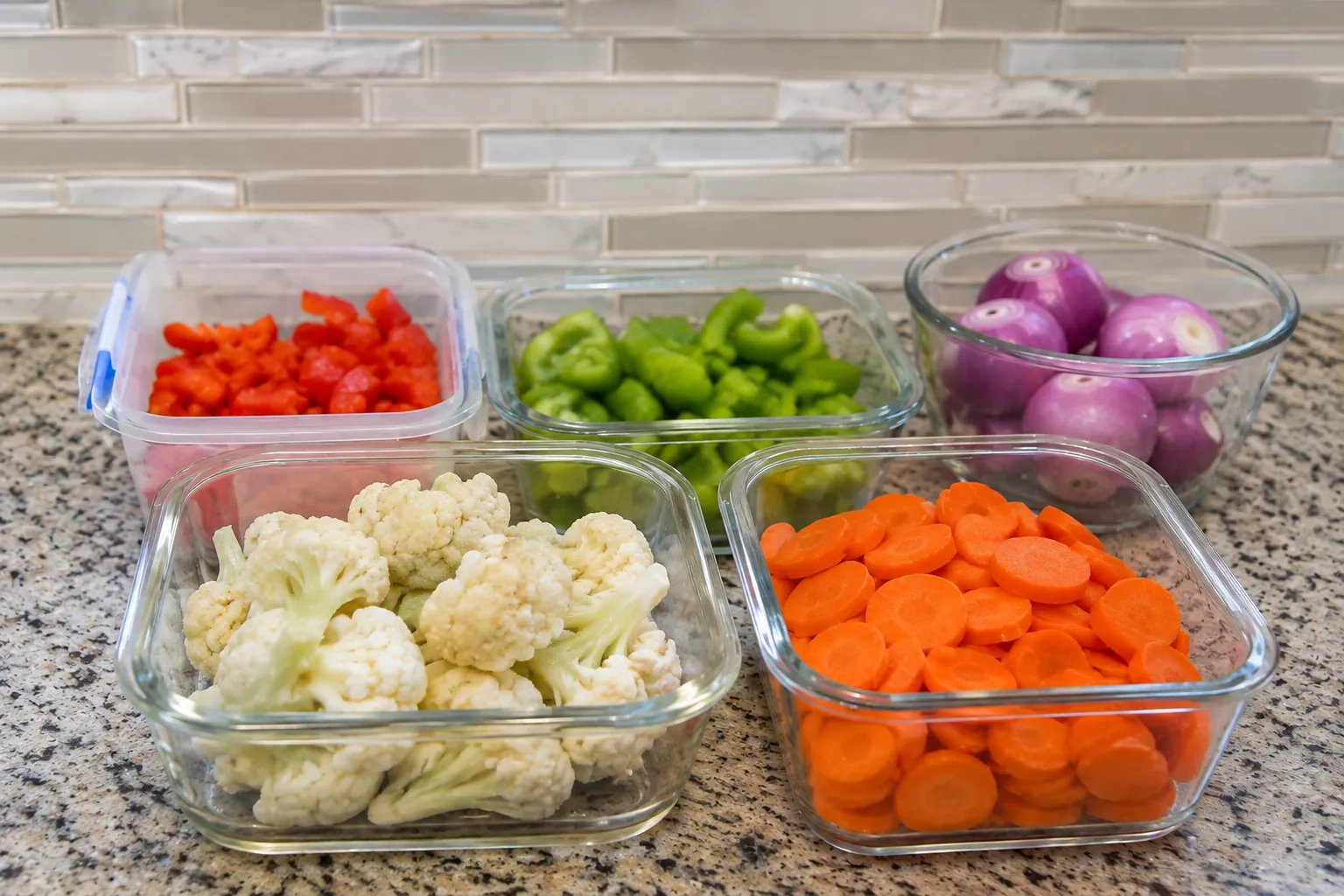
Learning how to store vegetables properly can help keep them fresh longer, reduce food waste, and save preparation time in the kitchen.
Sometimes you buy vegetables planning to use them throughout the week, but by the time you reach for them, the cilantro has wilted, the mushrooms have started to spoil, or the bell peppers have lost their crunch.
Over time, I’ve found that a few simple storage habits can make a big difference. Some vegetables are best stored whole, others can be prepared ahead, and a few can be frozen to make cooking easier later.
In this article, I’m sharing how I store and prepare commonly used vegetables in my kitchen to reduce food waste, save preparation time, and make everyday cooking easier.
Here’s a quick look at how I usually store and prepare vegetables and herbs in my kitchen. You’ll find the detailed methods and my personal kitchen tips below.
Quick Guide: How I Store and Prepare Vegetables
| Vegetable | Storage or Preparation Method |
| Cilantro | Refrigerate in a paper-towel-lined container or a glass of water |
| Cauliflower | Cut into florets, keep dry, and refrigerate |
| Mushrooms | Store whole in a paper bag in the refrigerator |
| Bell peppers | Refrigerate whole or chopped in an airtight container |
| Onions | Store peeled onions in an airtight container in the refrigerator |
| Ginger and garlic | Freeze prepared paste in small portions |
| Green beans | Blanch, cool, dry, and freeze |
| Curry leaves | Remove stems and freeze in a freezer-safe bag |
| Spinach and methi | Wash, portion, and freeze |
| Green chilies | Wash, dry, and freeze whole |
1. Cilantro (Fresh Coriander)
Cilantro can wilt quickly if it isn’t stored properly. Depending on how much I have and when I plan to use it, I follow one of these two methods.
Method 1: Store in a container
Wash the cilantro, spread it out, and allow it to dry thoroughly. Place it in a container lined with a paper towel, add another paper towel on top to absorb excess moisture, and refrigerate.
Method 2: Store in a glass of water
Trim the ends of the stems and place the cilantro in a glass with a little water, keeping the leaves above the waterline. Loosely cover the leaves with a bag and refrigerate. Change the water regularly.

My kitchen tip: If I have more cilantro than I can use while it’s fresh, I make cilantro or mint-cilantro chutney and freeze it in small portions. This gives me ready-to-use chutney without worrying about leftover cilantro going to waste.
2. Cauliflower
Cauliflower is one vegetable I often prepare ahead of time. Instead of keeping the whole head in the refrigerator, I sometimes cut it into florets so it’s ready for cooking.
How I store it:
- Cut the cauliflower into florets of your preferred size.
- Leave the florets unwashed until you’re ready to cook.
- Place them in a clean, dry container lined with a paper towel.
- Refrigerate and wash thoroughly just before cooking.
Keeping the florets dry helps prevent excess moisture from collecting during storage.
My kitchen tip: Having cauliflower already cut makes dishes like gobhi aloo or cauliflower sabzi quicker to prepare. For the best quality, I try to use the pre-cut florets within 2–3 days.
3. Mushrooms
I prefer using mushrooms as fresh as possible because too much moisture can make them slimy and affect their texture. However, preparing them ahead can be helpful when I know I’ll be cooking with them soon.

How I store them:
- Keep whole, unwashed mushrooms in a paper bag in the refrigerator.
- If preparing ahead, clean them and trim the stems as needed.
- If washing, dry them thoroughly with a paper towel.
- Store prepared mushrooms in a container lined with a dry paper towel.
- For the best quality, try to use prepared mushrooms within 1–2 days.
My kitchen tip: Sometimes I marinate mushrooms ahead of time for a particular recipe. I keep them covered in the refrigerator and usually cook them within 24 hours for the best freshness and texture.
For longer storage, I freeze the marinated mushrooms in a freezer-safe, airtight container or bag. When I’m ready to cook, I can add them directly to the pan without thawing. They may release extra moisture, so I cook them until the excess water evaporates and the mushrooms are fully cooked.
I find this especially useful for mushroom gravy, pasta, and other quick meals.
4. Bell Peppers (Capsicum)
I prefer keeping bell peppers fresh because I like them to retain a little crunch in my recipes. When I know I’ll need them within the next day or two, I chop them ahead of time.
How I store them:
- Keep whole, unwashed bell peppers in the vegetable drawer of the refrigerator.
- Wash and dry them thoroughly before chopping.
- Remove the seeds and cut them into strips or smaller pieces, depending on the recipe.
- Store chopped peppers in a clean, airtight container in the refrigerator.
- For the best texture, use chopped peppers within 1–2 days.
My kitchen tip: I use bell peppers in dishes like aloo shimla mirch, sandwiches, pasta, and fried rice. I usually cut them into strips for sabzi and sandwiches, and smaller pieces for pasta or fried rice.
Can you freeze them? Yes! Bell peppers can be frozen for cooked dishes, but they become softer after thawing. I prefer using fresh peppers when I want a slightly crunchy texture.
5. Onions
Onions are something I use almost every day, whether I’m making curry, sabzi, dal, or sandwiches.
One way I make cooking easier is by peeling a few onions ahead of time instead of preparing them from scratch for every meal.
How I store them:
- Keep whole, unpeeled onions in a cool, dry, well-ventilated place away from direct sunlight.
- Peel a few onions in advance and leave them whole.
- Store peeled onions in a clean, airtight container in the refrigerator.
My kitchen tip: I prefer peeling onions ahead rather than chopping all of them at once. This gives me the flexibility to slice, dice, or finely chop them depending on what I’m cooking.
6. Ginger and Garlic
Ginger and garlic are ingredients I use regularly in everyday cooking. Instead of peeling and chopping them each time, I like to prepare a small batch and freeze it.
This is particularly useful for recipes like chole, dal, paneer gravy, and vegetable curries.
How I prepare and store them:
- Peel the ginger and garlic.
- Wash the ginger and dry it thoroughly.
- Cut them into smaller pieces.
- Grind or crush them separately, depending on how you plan to use them.
- Spoon the prepared ginger and garlic into separate ice cube trays in small portions.
- Freeze until solid, then transfer the cubes to labeled freezer-safe containers or bags.

My kitchen tip: I prefer freezing ginger and garlic separately rather than making one combined paste. This allows me to use only ginger, only garlic, or both, depending on the recipe.
When cooking, I take out the amount I need and add it directly to the pan, allowing it to thaw and cook through. There’s usually no need to thaw it beforehand.
7. Green Beans (French Beans)
Green beans are easy to prepare ahead of time because they can be used in several dishes without much additional preparation.
How I prepare and freeze them:
- Wash the beans and trim both ends.
- Cut them into smaller pieces or leave them whole, depending on your meal plan.
- For the best quality, blanch them briefly in boiling water, then cool immediately in ice water.
- Drain and dry thoroughly.
- Freeze in portions in freezer-safe bags or containers.
My kitchen tip: I like preparing green beans in different sizes depending on what I plan to cook. Smaller pieces work well for fried rice, pulao, and mixed vegetable dishes, while longer pieces can be used in stir-fries and sabzi.
Frozen green beans work best in cooked dishes because they may lose some of their fresh crunch. I avoid using them in raw salads.
8. Curry Leaves
Curry leaves are one of those ingredients I like to keep ready in the freezer. I don’t always use an entire bunch at once, and freezing helps me avoid wasting the remaining leaves.
How I freeze them:
- Remove the curry leaves from their stems.
- Wash them thoroughly.
- Drain and shake off excess water. There’s no need to leave them out to dry for hours, but removing surface moisture helps prevent ice buildup.
- Place them in a freezer-safe zip bag and remove excess air.
- Store in the freezer and take out only what you need.
My kitchen tip: I add frozen curry leaves directly to hot oil when making tadka, dal, poha, or other dishes. They retain much of their characteristic aroma and flavor, although their texture may become more delicate after freezing.
9. Spinach and Methi (Fenugreek Leaves)
Spinach and methi are two leafy greens I like to prepare ahead of time. Cleaning and washing them can take a while, so I prefer doing this once and freezing them in portions for later use.
How I prepare and freeze them:
- Remove any damaged leaves and thick or tough stems.
- Wash the leaves thoroughly to remove dirt and grit.
- Drain well and remove as much excess water as possible.
- Divide the leaves into portions based on how you plan to use them.
- Place them in freezer-safe zip bags, remove excess air, and freeze.
My kitchen tip: I freeze spinach in two different ways.
Whole or chopped spinach: I freeze some leaves directly after washing and draining them. These are convenient for dal, soups, and vegetable curries.
Spinach puree: I also prepare spinach puree and freeze it in small portions. If I plan to use the spinach puree within 1–2 days, I store it in an airtight container in the refrigerator instead of freezing it.This makes recipes like palak paneer and spinach gravy much quicker to prepare.

For methi, I freeze the cleaned leaves in small portions and use them for dishes like aloo methi, methi paratha, and sabzi.
There’s no need to thaw the frozen leaves before adding them to most cooked dishes.
One thing to remember: I freeze these greens without blanching because it’s quick and convenient. However, blanching before freezing helps preserve their color, flavor, and quality for longer storage. Frozen greens also become softer, so they’re best used in cooked dishes rather than salads.
10. Green Chilies
Green chilies are one of the easiest ingredients to prepare and freeze. Since I use them regularly, keeping a small bag in the freezer saves me from washing and preparing them every time.
How I freeze them:
- Wash the green chilies thoroughly.
- Remove the stems.
- Dry them well to prevent excess ice buildup.
- Place them in a freezer-safe zip bag or airtight container.
- Freeze and take out as many as needed.
My kitchen tip: I usually freeze green chilies whole because I can decide how to use them later. I can add them directly to curries or thaw them slightly before chopping or crushing.
They retain much of their flavor and heat, although their texture becomes softer after freezing. They work particularly well in cooked dishes.
Freezing prepared vegetables in small portions is another way I make everyday cooking easier. Depending on the vegetable, I use freezer-safe bags or containers so I can take out only what I need for a recipe.

A Few Storage Habits Worth Remembering
Regardless of which vegetables you’re preparing, a few simple habits can help:
- Keep your refrigerator at 40°F (4°C) or below.
- Use clean containers and utensils when preparing vegetables.
- Label prepared or frozen ingredients with the date.
- Freeze ingredients while they’re still fresh rather than waiting until they’re close to spoiling.
- Discard vegetables that show signs of spoilage, such as mold, sliminess, or an unusual odor.
These small habits make it easier to keep track of what you’ve prepared and use ingredients while they’re still in good condition.
For food safety, I also make sure to refrigerate cut or peeled vegetables within two hours. The USDA recommends this to help keep fresh produce safe to eat.
Final Thoughts
Preparing vegetables ahead of time doesn’t mean chopping everything as soon as you bring groceries home.
For me, it’s about knowing which ingredients I can prepare in advance and which ones are better left whole. Even having a few ingredients ready can make a busy cooking day feel more manageable.
You don’t need expensive containers or a complicated system. Start with the vegetables you use most often and find a routine that works for your kitchen.
And if you ever open your fridge wondering what to cook with the ingredients you already have, you might find my article What to Cook When You Have Almost Nothing in the Fridge helpful for simple meal ideas.





Leave a Reply