Ingredients
Equipment
Method
- Activate the Yeast - In a large bowl, combine warm water, sugar, and active dry yeast. Stir gently and let it sit for about 10 minutes, or until the mixture becomes foamy.
- Prepare the Dough - Add the flour and salt to the yeast mixture. Mix everything with a spoon until the ingredients start coming together. If the dough feels too sticky, add 1–2 tablespoons of flour. If it feels too dry, add 2–3 tablespoons of water gradually. The dough should be soft and slightly sticky, not stiff.
- Knead the Dough - Transfer the dough to a clean, flat surface and knead for 5–7 minutes by pushing, folding, and stretching until it becomes smooth and elastic.
- Let the Dough Rise - Place the dough back into the bowl and cover it with a plate or plastic wrap. Leave it in a warm place until it doubles in size.
- Shape the Bread - Once the dough has doubled, gently punch it down to release the air. Knead for another minute, then shape it however you prefer. You can make small buns, a regular loaf, or a large round bread.
- Rest and Preheat - Let the shaped dough rest for another 10–15 minutes. Meanwhile, preheat your oven to 350°F (175°C).
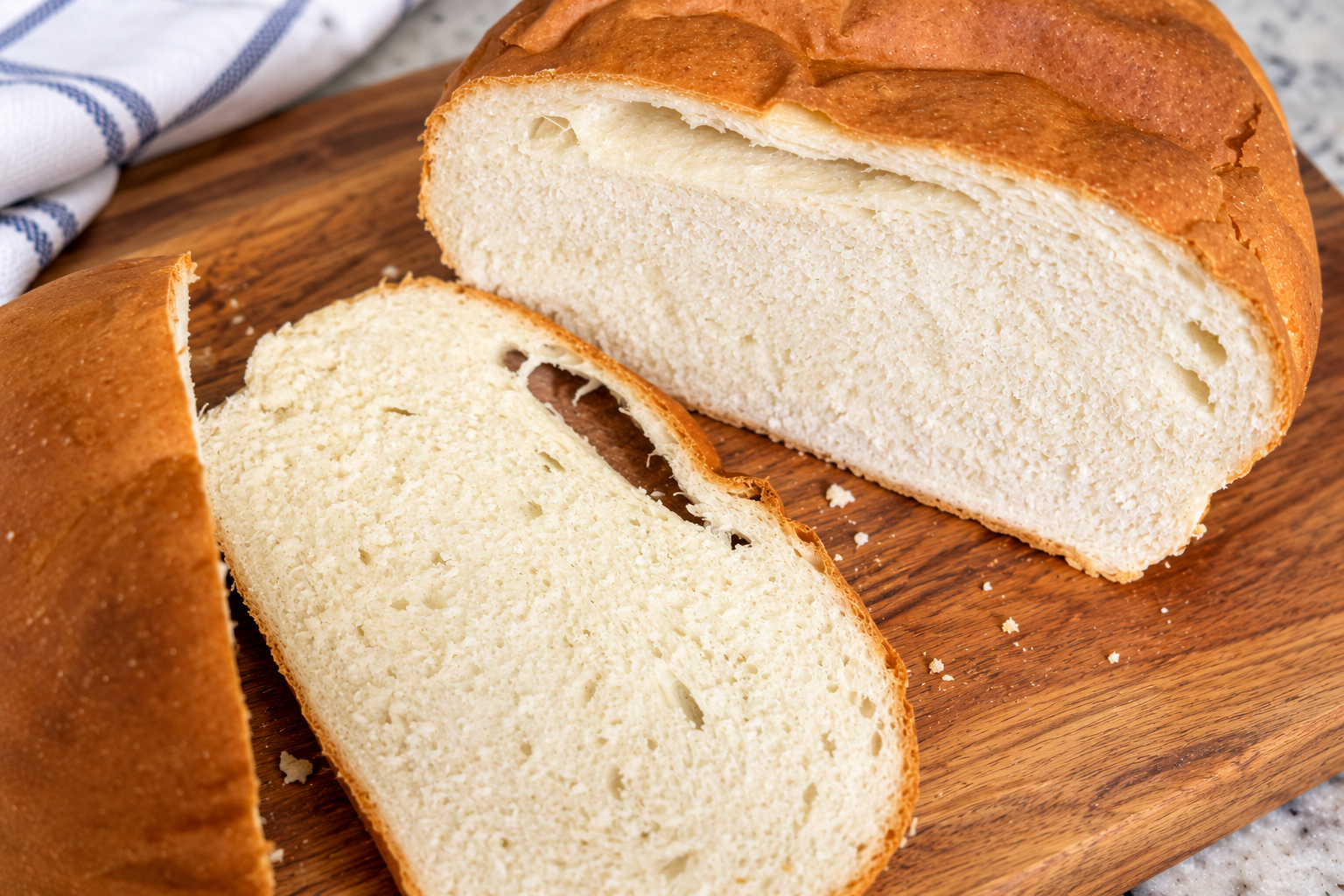
- Bake the Bread - Bake for approximately 20–25 minutes, or until the outside turns golden brown. Baking time may vary depending on the size and shape of your bread. Small buns may bake faster, while larger loaves may need additional time. For best results, check that the center reaches approximately 190–200°F.
- Cool and Serve - Remove the bread from the oven and cover it loosely with a clean kitchen towel for about 30 minutes. Allow it to cool before slicing and serving.
Notes
Dough Consistency - The dough should be soft and slightly sticky, not stiff or tight. Add extra flour or water gradually, only if needed.
Rising Time - The time needed for the dough to double depends on the room temperature. In a warmer kitchen, it may rise faster.
Bread Shapes - You can use this dough to make small buns, a regular loaf, or a large round bread. Baking time will vary depending on the size and shape.
Oven Temperature - Every oven is different, so keep an eye on your bread while it bakes. The crust should be golden brown, and the center should reach approximately 190–200°F.
Keeping the Bread Soft - Cover the freshly baked bread loosely with a clean kitchen towel while it cools. This helps soften the crust.
Storage - Once completely cooled, store the bread in an airtight container or sealed bag at room temperature for up to 2 days. For longer storage, slice and freeze it.